
Who was Paul?
What Did Paul Look Like?
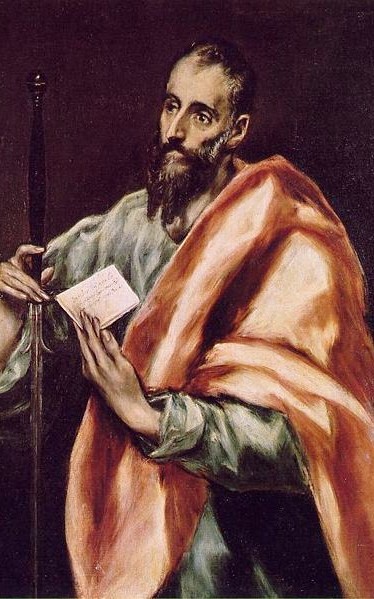
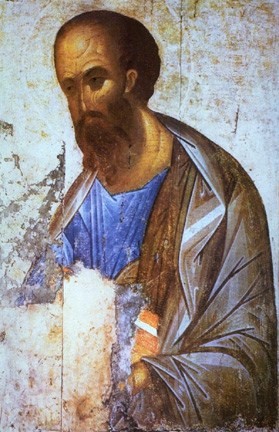
What did the Apostle Paul look like? We don’t have any descriptions of his appearance in the Bible. Our earliest description comes from the Acts of Paul and Thecla. The Acts of Paul and Thecla (Acta Pauli et Theclae) is part of the New Testament apocrypha. Originally it formed part of the 2nd century text, "the Acts of Paul," but circulated separately. It narrates events in the life of Paul, when he met a virgin named Thecla of Iconium. Opinions vary as to whether it records an authentic portrait of the apostle. In many ways this description became a part of the church’s iconography and forms the basis for his portrait in the Eastern Orthodox Church.
Quoting from that work, “A certain man, by name Onesiphorus, hearing that Paul had come to Iconium, went out to meet him with his children Silas and Zeno, and his wife Lectra, in order that he might entertain him: for Titus had informed him what Paul was like in appearance: for he had not seen him in the flesh, but only in the spirit. He went along the road to Lystra, and stood waiting for him, and kept looking at the passers by according to the description of Titus. He saw Paul coming, a man small in size, bald-headed, bandy-legged, well-built, with eyebrows meeting, rather long-nosed, full of grace. For sometimes he seemed like a man, and sometimes he had the countenance of an angel.”
We know much more about what Paul thought through his works than we know about Paul himself. Luke's accounts of Paul in Acts gives us one set of information about Paul, while we can glean clues about Paul and his life from throughout his letters. While it is Paul's words that inspire us today, we can still discover much about the life of the church's greatest missionary.
As a citizen within the Roman Empire, the Apostle Paul had three names—
 a fore namea family namean additional name used in daily life.
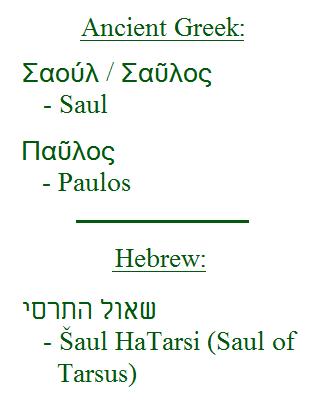
 Of these three types of names, only his common name of daily life is known. In the Greek, his name was Paul. This was the name he used in identifying himself in his letters written to the various churches of the New Testament.
We learn of Paul’s Jewish name only through the writings of Luke in the Acts of the Apostles. When Luke speaks of Paul in the context of the Jerusalem scene, he refers to Paul as Saul. Since the apostle was from the tribe of Benjamin, (the most famous Benjaminite being the first king of Israel, King Saul), and perhaps because of the rhyming qualities of the two names, Saul and Paul appear to be interchangeable depending upon the setting, i.e., Jewish or Gentile.
Luke’s first usage of the name Paul appears in Acts 13: 13 as Paul and Barnabas left the island of Cyprus and began their first missionary journey among the Greco-Roman world in the region of Asia Minor (modern Turkey). From this point on, Luke consistently refers to Paul using his Greek name.
Why Are There Various Names for Paul?
Paul the Tentmaker
Luke states that Paul was a “tentmaker” (Acts 18: 3), a weaver of tent cloth from goats’ hair. The term can also mean one who as a leather worker.
It was not unusual for many rabbis to practice a trade. This was done so they might offer their teaching without a fee. Paul followed this procedure in his missionary activities; “These hands of mine have supplied my own needs and the needs of my companions” (Acts 20: 34).
By engaging in a trade he was able to set and example for his converts; “For you yourselves know how you ought to follow our example. We were not idle when we were with you, nor did we eat anyone’s food without paying for it. On the contrary, we worked night and day, laboring and toiling so that we would not be a burden to any of you…For when we were with you, we gave you this rule: If a man will not work, he shall not eat” (II Thessalonians 3: 7-10).
By working, Paul was also able to avoid any criticism from his distracters who might accuse him of mercenary motives. Of course, when Paul was offered the hospitality of others, he received it in the same gracious manner in which it was offered.




If you would like to join our mailing list, please enter your email below
