
Cities and Locations
During his missionary journies, Paul became a hardened traveler, covering much of the Mediterranean world. Below is a list of the many cities and regions he visited.
Achaia
During the time of Paul, this name was used to refer to the southern province of Greece that included the cities of Corinth, Athens, and Cenchreae. II Corinthians 1: 1; I Thessalonians 1: 8.
Antioch in Syria
Second only to Jerusalem, Antioch served as a major center of the early church. Barnabas and Paul ministered in this community for a whole year. In this city, the disciples were first called “Christian” (Acts 11: 6). Paul began and ended his first and second missionary journeys from the seaport of Antioch. His third journey also began from this city.
Athens
Athens was visited by Paul during his second journey. Paul delivered his famous sermon, “To The Unknown God,” while standing before the council of Athens known as the Areopagus. Acts 17: 16-32.
Berea
After a riot in Thessalonica instigated by the synagogue, Paul and Silas, under cover of night, made their way to Berea. While in Berea, Paul once again preached in the synagogue, explaining from the scriptures daily that Jesus had to suffer and die and rise from the dead and that He was the Messiah. One of Paul’s traveling companions, Sopater, was from Berea. Acts 17: 11; Acts 20: 4.
Corinth
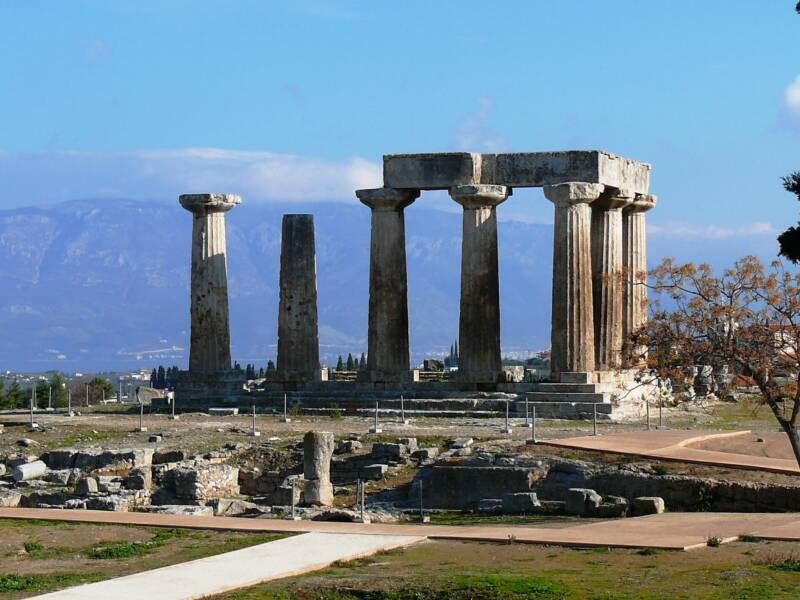
Corinth, located on the Peloponnese Peninsula, boasted two harbors, Lachaeum on the Gulf of Corinth, and Cenchreae on the Saronic Gulf. It was a leading center of commerce and industry, particularly ceramics. Paul’s ministry in Corinth lasted a significant amount of time, 18-months, during which he labored as a tentmaker with coworkers Aquila and Priscilla. Acts 18: 1-18
Damascus
This leading city of Syria was the destination of Saul as he set out to persecute the followers of Christ. Following his conversion, Paul preached his first sermon as an apostle of Christ. Acts 9: 2, 10, 19
Ephesus
Ephesus was the most important city in the Roman province of Asia. It also served as headquarters of Paul for a period of approximately three years. Acts 18: 18-21; 19.
Galatia
Galatia was a Roman province located in Asia Minor. Within the province were towns Paul evangelized on his first missionary travels: Antioch, Iconium, Lystra, and Derbe. Acts 13 - 14.
Macedonia
Macedonia was a kingdom in what is today northern Greece. The most renowned Macedonian king was Alexander the Great (4th c. BC). Paul, in response to a vision from the Lord, sailed to Macedonia from the port of Troas. He founded churches in Philippi, Thessalonica, and Berea. Acts 16: 9; I Thessalonians 1: 7.
Philippi
This city of Macedonia derived its name from the father of Alexander the Great, Philip II, who reestablished this city in 360 BC. In 42 BC the famous battle with Antony and Octavain against Brutus and Cassius was waged on the plains of Philippi. Paul and Silas were imprisoned here during their second missionary journey. The church at Philippi was a strong supporter of Paul and his ministry. Acts 16; Philippians 1: 7.
Rome
This city was founded in 753 BC on its seven hills. It was the center of the Roman Empire and the seat of the senate and of the Caesarian administration. During the New Testament period, Rome was a cosmopolitan city with a population over a million. Paul’s letter to the Romans differs from his other letters in that it is less personal but more systematic and theological. After Paul was arrested in Jerusalem and put on trial, he appealed his case to Caesar. As a result, Paul case was transferred to Rome. His journey to Rome was by ship. Acts concludes its life of Paul with Paul under house arrest but free to preach about the Lord Jesus Christ. Acts 25:11; Acts 28: 31.
Tarsus
This city was located on the Cilician plain and just inland from the Asia Minor coast. It was the home of Paul during his childhood. Tarsus was a meeting place between East and West and served Paul well as he carried the gospel from its eastern roots within Judaism into the western world of the Gentiles. Acts 9: 30; Acts 11: 25
Thessalonica
Thessalonica was the leading city of Macedonia during the time of Paul. Its geography served it well as it sat on the major land route from Italy to the east as well as the main route from the Aegean to the Danube. Soon after his departure from the city during his second journey, Paul penned two letters to this congregation encouraging them to serve as a model Christian community. I Thessalonians 1: 8.
Troas
Located on the coast of north-western Asia Minor, Troas (approximately 12 miles from ancient Troy), it was the crossing port from Asia Minor to Macedonia. Paul received his Macedonia vision while in Troas. Later, on his third journey and in Troas once again, Paul raised Eutychus from the dead after the youth fell from an upper story window. Acts 16: 9-10; 20: 7-12.




If you would like to join our mailing list, please enter your email below
